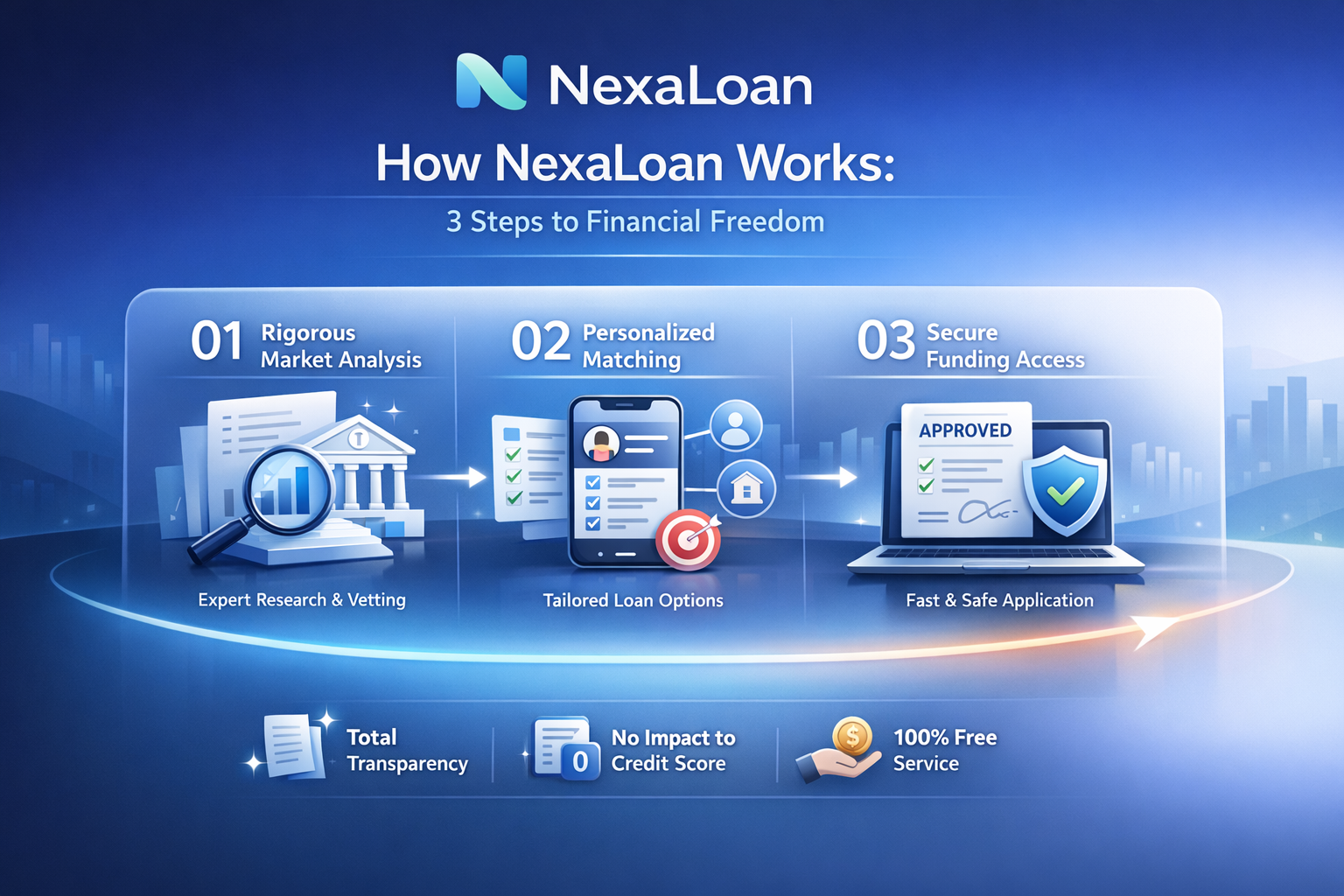
NexaLoan is an educational publisher, not a lender. We do not make credit decisions, fund loans, set APRs, collect loan applications, or promise approval. Our job is to help U.S. consumers understand personal-loan costs, qualification factors, repayment risk, and safer comparison steps before they move to a lender or marketplace.
NexaLoan exists for readers who need clear borrowing information before making a financial decision. Personal loans can be useful when the payment fits and the total cost is understood. They can also make a difficult situation worse when a borrower focuses only on speed, ignores fees, or accepts a payment that does not survive a bad month.
Our site is built around that tradeoff. We publish guides, calculators, lender reviews, and decision frameworks that help readers slow down, compare the right variables, and reject offers that do not fit their budget or risk profile.
What NexaLoan Publishes
NexaLoan covers personal loans, debt consolidation, emergency borrowing, credit-union loans, bad-credit borrowing, refinance questions, credit-score preparation, income documentation, and repayment hardship topics. We also maintain planning tools such as the personal loan calculator and guides that explain debt-to-income ratio, origination fees, prepayment penalties, soft-pull prequalification, and lender disclosures.
Each page is written to answer practical borrower questions: who the option may fit, what documents may be needed, what costs to compare, what can go wrong, and when a non-loan alternative may be safer.
How We Review a Borrowing Topic
Our review process starts with the borrower problem, not a lender list. A debt-consolidation reader, a self-employed borrower, a credit-union member, and a borrower recovering from late payments need different comparison criteria. That is why many NexaLoan guides include borrower-fit sections, risk warnings, cost tables, and links to related planning pages.
| Review layer | What we check | Why it matters |
|---|---|---|
| Cost | APR range, origination fee, term length, late fees, prepayment policy, and total repayment | A lower monthly payment can still cost more if the term is too long or fees are high. |
| Eligibility | Credit profile, income documentation, debt-to-income ratio, state availability, cosigner or collateral options | A lender can look attractive but still be a poor fit for the reader’s file. |
| Process | Soft-pull prequalification, hard inquiry timing, funding speed, document review, and final loan agreement steps | Readers should know when a rate check becomes a full application. |
| Risk | Upfront-fee requests, unclear disclosures, unaffordable payments, rollover behavior, and pressure tactics | Borrowing should reduce pressure, not hide it for a few weeks. |
Source Hierarchy
For rules, consumer protections, and scam warnings, we prioritize primary sources. That includes the Consumer Financial Protection Bureau, the Federal Trade Commission, the National Credit Union Administration, the FDIC, the IRS, the Federal Reserve, state regulators, and official lender disclosures where relevant.
When a guide discusses a lender, we look for current public disclosures from the lender itself, including APR ranges, fee language, eligibility notes, repayment terms, prequalification wording, and state restrictions. When a claim cannot be verified from a reliable source, we avoid presenting it as a fact.
What NexaLoan Does Not Do
- We do not approve, deny, fund, broker, or service loans.
- We do not promise approval, specific APRs, specific savings, or same-day funding.
- We do not tell readers to borrow when the payment is unaffordable.
- We do not recommend paying upfront fees to unlock a promised loan.
- We do not present prequalification as a final loan offer.
Borrower safety note: If a company promises funding before reviewing your credit, income, identity, and ability to repay, or asks for money before releasing loan funds, treat that as a major warning sign. Verify the lender directly and read the loan agreement before accepting any offer.
How Readers Should Use NexaLoan
- Start with the problem. Decide whether the real goal is debt consolidation, emergency cash, credit rebuilding, medical expenses, home repair, or payment relief.
- Run the numbers. Use the loan calculator before applying. A loan that looks manageable at the headline APR may look different after fees and a longer term.
- Check fit signals. Review income documentation, debt-to-income ratio, credit history, recent late payments, and loan purpose restrictions.
- Compare disclosures. Confirm APR, fee, term, payment date, prepayment policy, and hard inquiry timing directly with the lender.
- Keep records. Save final loan terms, lender contact details, payment schedule, and any hardship or autopay language.
Editorial Independence, Ads, and Updates
NexaLoan may display advertising. Ads help support the site, but editorial pages should remain useful without clicking an ad. We separate educational content from advertisements and keep ad placement conservative on tools and high-trust pages.
Our editorial standards are explained in our editorial policy, review methodology, advertising disclosure, and corrections policy. If a page needs correction, clarification, or source refresh, we update the page rather than leaving stale information in place.
The Bottom Line
NexaLoan works best as a decision support layer. Use it to understand the loan type, compare real costs, check risk signals, and prepare better questions before visiting a lender or marketplace. The safest borrowing decision is not always the fastest one; it is the one whose terms, payment, and risks you understand before signing.
Sources & Editorial Fact-Check
NexaLoan maintains strict editorial integrity. We verify financial data against primary sources, including official registries and regulatory bodies where applicable.